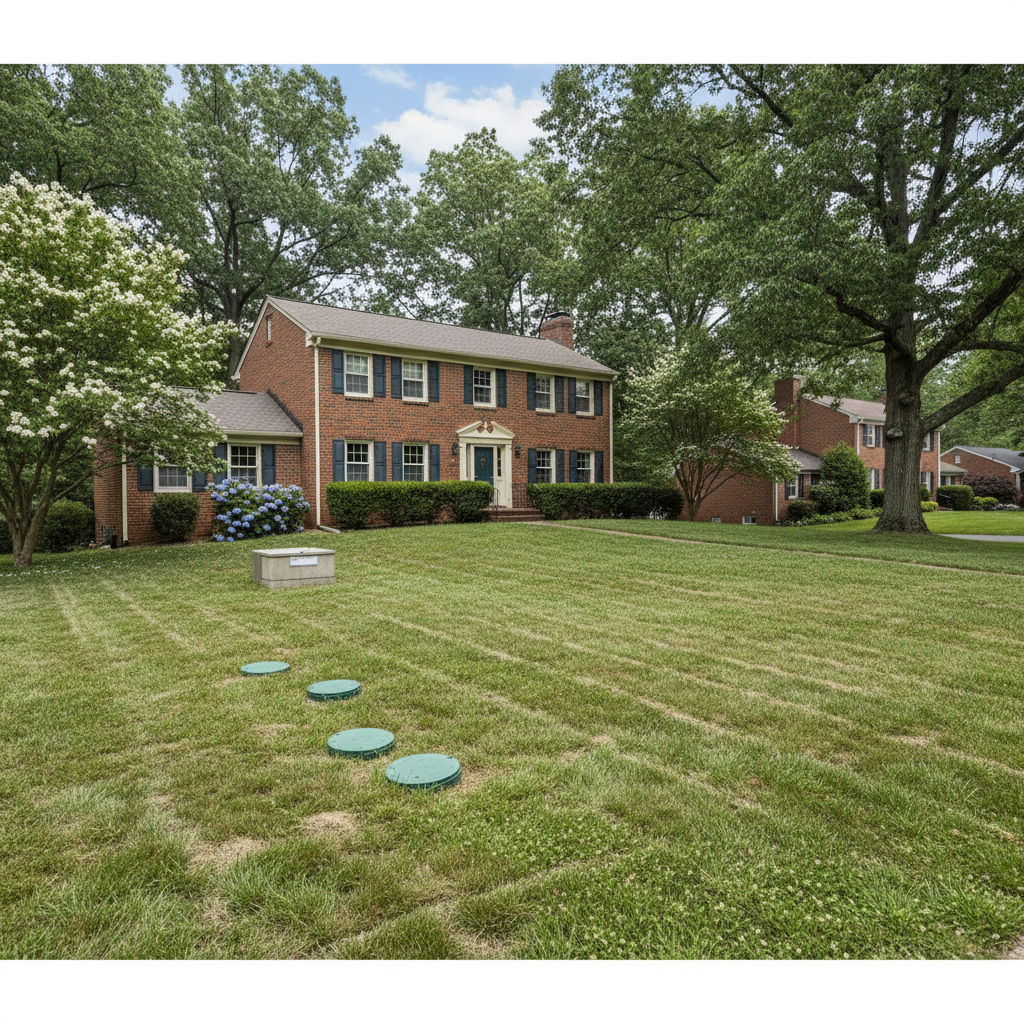
What's the Deal with Geothermal Drilling Costs?
You're looking at geothermal for your home, and the first question everyone asks is, "How much does it cost?" It's a fair question, and frankly, it's one of the biggest hurdles for folks. I've been in this business a long time, and I've seen a lot of changes, but one thing stays constant: people want to know what they're getting into financially. So, let's talk real numbers for geothermal drilling right here in Baltimore.
First off, don't expect a one-size-fits-all price. It just doesn't work that way with drilling. We're talking about putting holes deep into the earth, and every property is a bit different. But I can give you a solid range and explain what pushes those numbers up or down.
What Drives the Price Tag?
A few key things dictate how much you'll pay for the drilling part of your geothermal system. Remember, this is just the drilling, not the whole HVAC setup.
- The Size of Your System: This is probably the biggest factor. A bigger house, or one with higher heating/cooling demands, needs more loops, which means more drilling. We're usually talking about vertical closed-loop systems around here. A typical residential system might need anywhere from two to six boreholes, each going down 200 to 500 feet.
- Ground Conditions: This is huge in Baltimore. We've got everything from soft sediments near the Inner Harbor to some pretty tough rock out in places like Catonsville or up near Towson. Drilling through solid rock takes longer, wears out bits faster, and generally costs more per foot than drilling through softer soil or clay. We always do a geological survey or at least check local well logs to get an idea of what we're up against.
- Drilling Depth and Number of Boreholes: Like I said, more feet equals more cost. If your system needs 1,000 linear feet of drilling, that's different from 2,000 feet. The number of individual holes also matters because each one requires setup time.
- Site Accessibility: Can we get our rig in there easily? If we have to navigate tight spaces, move landscaping, or work around existing structures, that adds to the labor and complexity.
- Permitting and Regulations: Baltimore County, City, and surrounding areas all have their own rules. We handle the permits, but the fees for those are part of the overall cost.
Typical Cost Ranges for Geothermal Drilling in Baltimore
Alright, let's get to some numbers. For the drilling portion alone, you're generally looking at a range of about $15 to $30 per linear foot. This includes the drilling itself, installing the U-bend pipe, and grouting the boreholes.
So, for a typical residential system that might require, say, 1,500 linear feet of drilling (e.g., three 500-foot boreholes or five 300-foot boreholes), you're looking at a drilling cost between $22,500 and $45,000. This is a significant chunk of the total geothermal system cost, which can easily run from $30,000 to $60,000+ for the whole shebang (drilling, heat pump, ductwork modifications, etc.).
Don't forget about the federal tax credit, usually 30% of the total system cost. That can make a big difference in the net cost.
What Should a Quote Include?
When you get a quote from Absolute Well Drilling, or any other reputable driller, here's what you should expect to see itemized:
- Mobilization/Demobilization: Getting the rig to your site and taking it away.
- Drilling Footage: The cost per linear foot, often broken down by estimated rock vs. soil if we know it.
- Loop Installation: Cost for the geothermal pipe (usually HDPE) and U-bends.
- Grouting: Filling the boreholes with thermal grout to ensure good heat transfer and seal the well.
- Headering: Connecting the individual loops at the surface to a manifold that runs into your house.
- Permit Fees: Any fees required by local authorities.
- Site Restoration (Basic): Filling in the drill pits, basic cleanup. Anything beyond that, like extensive landscaping repair, is usually a separate discussion.
Make sure they specify the type of pipe, the grout material, and the expected depth of each borehole. Transparency is key.
How to Avoid Overpaying
You don't want to get ripped off, and you shouldn't. Here's my advice:
- Get Multiple Bids: Always. Three is a good number. Don't just go with the cheapest; compare what's included.
- Ask for References: Talk to other homeowners who've used them. Were they happy? Did the project stay on budget?
- Understand the Scope: Make sure every quote is for the exact same scope of work. If one quote is significantly lower, it might be missing something important.
- Check Licenses and Insurance: This is non-negotiable. Anyone drilling on your property needs to be properly licensed and insured.
- Don't Be Afraid to Ask Questions: If something in the quote doesn't make sense, ask. A good contractor will take the time to explain it clearly.
Geothermal is a fantastic investment for long-term energy savings and comfort. It's a big upfront cost, no doubt, but done right, it pays off. Just make sure you're working with experienced folks who know what they're doing underground.